The dimensions of ancient Greek myths

Possibly the most important source of psychological insight is Greek mythology. A vast domain of research for disciplines such as history, anthropology, philosophy, psychology, astrology, art, literature, with the strongest bond between mythology and religion, including its ritual practices.
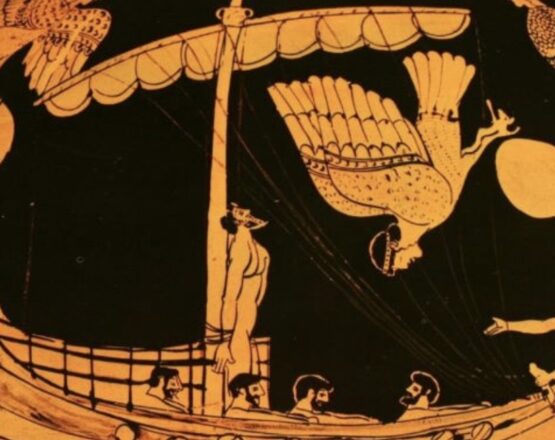
The dimensions of ancient Greek myths can be: * literary (the expedition of the Argonauts) * historical epic (The Trojan War) * esoteric (the orphic mysteries) * initiatory (the voyage of Ulysses) * moral (Daedalus and Icarus) * psychological (the story of Oedipus). The list is so long.
Between myth and psychology, the ties are numerous. The psychological interpretation finds in myths an extraordinary material, the perfect occasion to separate the setting from the object, the details from the essence, or, in psychoanalytic language, the hidden from the noticeable. What may be confusing is the multitude of significations found in myths by different psychologists and schools of thought, such as the expression of archetypes (Jung), the form of language (Levi-Strauss), cultural reality (W. Wundt), etc. “Is the spirit Zeus of life; the harmony of needs: Apollo; the intuitive inspiration: Pallas Athena; the act of forcing back: Hades etc. The impulse of evolving is represented by the hero; the inner conflict is represented by the fight against the monsters all great myths describe, the dramaturgy of our inner life. All myths have several levels At the first level, the formal one, the story in itself is important, as a succession of events that leads to a specific end. The second and third levels, much more valuable for psychology, are based on the act of interpretation. “The myth as evidence” is related strictly to its “creator”, a nation or a tribe. Instead, “The myth as truth” goes beyond the geographical, cultural and historical borders. We are talking, of course, about the psychological truth, the universal signification, the one that reveals something about the human been in itself. Such an analysis is frequent in psychology, mentioned by Sigmund Freud, who believed in the universality (afterwards contested) of the famous Oedipus complex. Myths offer us the chance to investigate the conception ancient communities had about the human soul. So what of the ancient Greek soul from their mythology? As in the case of all polytheist religions, the Greek myths talk about the origin of the world and of humans, as well as the actions of Gods and heroes. The legend of cosmogony is, often, a story about “the birth” of psychological and behavioral manifestations. “The Night gave birth to Moros then Hypnos (the sleep) and Oneiroi (the dreams), as well as a multitude of evil Gods: the Vengeance, the Fraud, the Haste, the Oldness, the Argue, from which cane – the Trouble, the Forgetfulness, the Hunger, the Disease, the Fight, the Murder, the War, the Slaughter, the Dissension, the Lie and Words with double meaning, the Injustice and the Oath. In the service of Olympian Gods there were: the Hours (representing the idea of order and regularity), Moira (faith), Nemesis (the reward for injustice), the Muses (the idea of art), Iris, Hebe (youth) and Ganymede (the beautiful servant of Gods) Even the main ages find a correspondent in the being of certain Gods: Hermes smart and creative, “the heroes are associated with the rituals of spiritual initiation.
The psychic, along with the body, is under the influence of natural laws. Craving for universal harmony (won by defeating the giant Tifon with the help of Hermes – intelligence), ancient Greeks valued equilibrium and psychological normality. To oppose these is a crime leading to some sort of punishment. Prometheus, the prototype of genius and of an unthinkable braveness, was severely punished by the Gods.
Erinies, the Greek name for Furies. “From Antiquity, they started to be identified with conscience. Brought “inside” the mind, they symbolize the remorse, the feeling of guilt, the self-destruction. The correspondence with the Eumenides reveals a complex psychological dynamics. “This evolution is related with that of the conscience, which first forbids and after that punishes. The Erinies can transform into Eumenides, favorable divinities, when reason brings the morbid conscience to a better appreciation of human soul.
Ancient people have noticed the dual nature of humans, expressed in the myth of the Dioscures. “Pollux (the soul) can’t live his terrestrial experiences without Castor (the body) As to the existence of conscience and unconscious in our being, the ancient Greeks not only have guessed it, but they also created some suggestive metaphors concerning it: passing to the world of Hades, the fight between Theseus and the Minotaur, Apollo’s victory upon Python is the triumph of reason upon instinct, the conscience upon the unconscious But, even best represented in Greek mythology, are the antagonism and complementarities between rational and emotional.
We can clearly notice the Greek preference for reason, order, and Logos. Therefore, “Athena is the worst enemy of Ares, whom she defeats in the famous battle of the Gods. And so, wisdom defeats anger and brute force. The mother of the Goddess was Metis, Prudence. In the same way, Athena wins the capital city from Poseidon, God of the irrational, sudden and violent gestures, monstrous instinctive. The symbolic gesture of domesticating the horse offered by Poseidon to the Athenians signifies the reshaping, with the help of the intellect, of what is natural and unrefined.
About the “pair” Apollo – Dionysus by Nietzsche in relation to the philosophy of culture) we can think of as “the harmony of reason” versus “the experience of ecstasy”. Dionysus, God of mysticism, symbolises the surpassing of inhibitions and repressions. But the opposition between reason and emotion isn’t always seen as a conflict. The symbol of perfection, the Hermaphrodite, the one that integrates the masculine and the feminine, is, as its name demonstrates, the son of the intellect Hermes and affectivity Aphrodite. More than this, the respect for and importance of Aphrodite, Goddess of love, in Greek mythology is obvious.
The sexual act is the specific domain of Aphrodite, which she inspires and protects. Her opposite is Artemis, a virgin Goddess. Greeks have seen in her eternal virginity the indifference towards love. In the tragedy of Euripides Hippolytos Artemis herself states her hate for Aphrodite” She wins the apple of Discord because love comes first before power (Hera) and wisdom (Athena). The eternal lover of the Goddess is Ares (whose cohort is formed by: Enyo – the destruction, Eris – the dispute, Deimos – terror and Phobos –
Eros (passion). Eros the myths say that “his arrows are of two kinds: ones made of gold, soaked in honey, others made of lead, soaked in poison” Love is joy and also soreness, just as the affective processes are characterized by polarity and mobility. The ancient Greeks loved creation, talent and art.
Even the origin of the word psychology leads us to a myth: Psyche and her lover, Eros. Psyche, in the Greek language means soul. But the soul rises only through love. Psychology is the study of the human soul in search of loveAncient Greek mythology offers a profound insight into the human soul and early forms of psychology. While philosophers like Pythagoras, Socrates, Plato, and Aristotle explored the nature of the soul, myths provided a vivid, symbolic lens to understand human emotions, instincts, and behaviors.Ancient Greek mythology offers a gentle and fascinating window into the human soul. Through its stories of gods, heroes, and mythical creatures, we glimpse the earliest explorations of psychology—our emotions, instincts, and inner struggles—woven into a world of wonder and imagination.
Heroes journey through trials that mirror our own inner challenges, battling monsters that symbolize fear, doubt, and the darker corners of the mind. Even the Erinyes, the dreaded Furies, eventually transform into Eumenides, showing how guilt and conscience can evolve into wisdom and inner harmony.