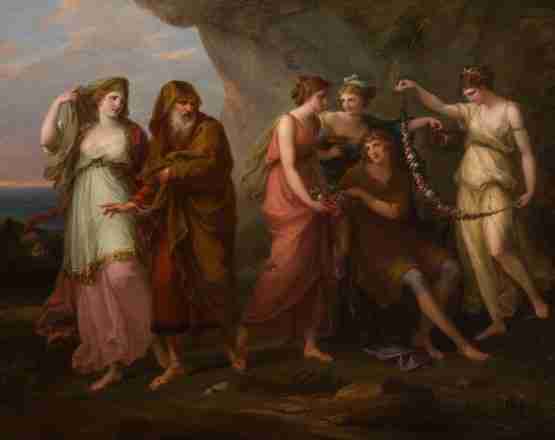
Rethymno Carnival how the God Dionysus is celebrated today
As winter reluctantly yields to spring, Greece erupts in a vibrant celebration of life’s annual rebirth.
Join the Rethymno Carnival, a celebration of life and good things to come!
Behind their colourful masks, revellers boldly challenge long-standing values and social hierarchies. The materials used in Apokries are remarkably consistent across Greece, symbolising a universal desire for good fortune and prosperity since ancient times. This festival captures the earth’s exuberance, celebrating harvest abundance and the vitality of both humans and animals. In rural communities, during this transitional period, rituals echo ancient magical customs—aimed at hastening spring’s arrival and ensuring fertile fields. Their paradoxical agricultural customs during Carnival aren’t just for joy and entertainment; they’re driven by a deep, soul-connected instinct that acknowledges humanity’s reliance on nature.
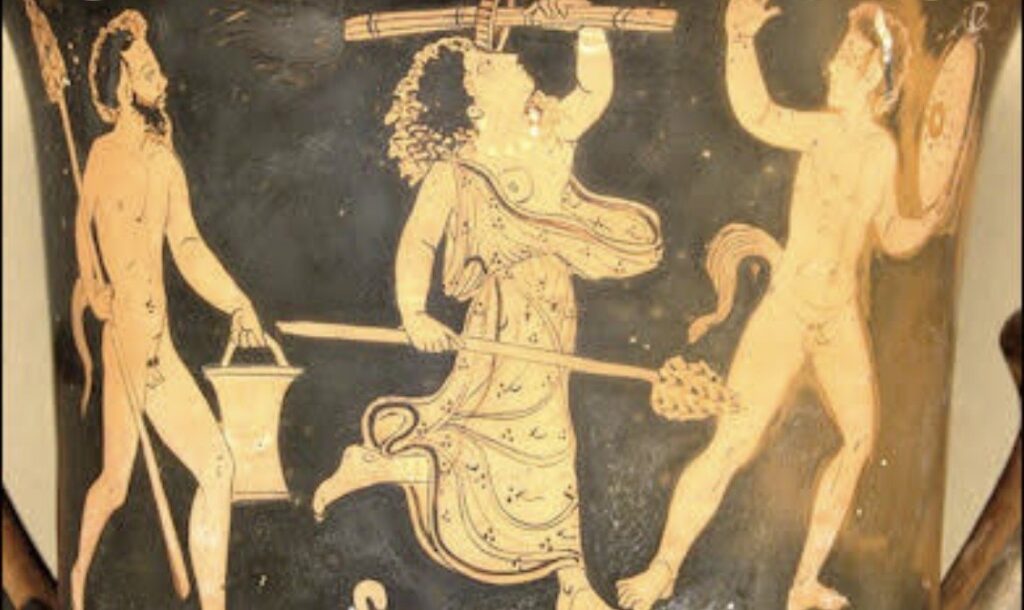
The origins of the Greek carnival trace back to ancient Greece and are closely linked to Dionysus, the god of wine and revelry. The word “carnival” comes from Latin roots meaning “to stop eating meat,” aligning with Greek terms like “apokreo” or “apokria,” sharing the same meaning. This tradition is rooted in pagan rituals honouring Dionysus, where participants wore satyr masks and costumes, filling the streets with provocative behaviour and daring acts. Dionysus sought “catharsis,” using wine and dance to achieve psychological liberation. The wild dance, collective hysteria, and frenzied celebration served to free individuals from their usual selves, with Dionysus as the liberator, bringing cleansing and renewal.
Mythical Maenads and Bacchantes, with their vivid imaginations and heightened senses, are iconic figures of this chaos. Armed with thyrsus and torches, they follow their unseen god, chanting hymns, dancing wildly, and crying out fiercely. Through their fervent dance, they aim to separate the soul from the body and unite with the divine.
In the church’s tradition, what we call “Carnival” is known as “Triodion.” Named after the ecclesiastical book containing hymns for this period, the Triodion features hymns with three verses, unlike the usual nine. The season begins on the first Sunday with the Gospel of “The Publican and the Pharisee,” followed by “The Prodigal Son” on the second Sunday, and culminates with “Apokreo” on the third. The final Sunday, “Tyriini” (cheese-eating), marks the height of festivities, culminating on Ash Monday—the start of Great Lent.
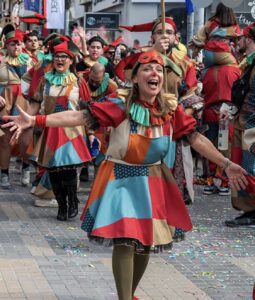 For an authentic Carnival experience, Rethymno proves unbeatable. Here, volunteers from all over Greece come together to build vibrant floats from scratch, celebrating life and hope for a brighter future. The energy is infectious, the spirit unbreakable—truly a spectacle of joy and renewal!